The Industry of Time
Film Series & Documentaries
The Industry of Time is an innovative film series about the Swiss watchmaking industry through captivating storytelling and artificial intelligence (AI) generative technology. The series merges the rich cultural heritage of Swiss folklore with the evocative power of AI-generated audiovisual narratives, weaving past and present, click of the clock and magic, into a unique experience.
The story of Daniel Jeanrichard is somehow the origin story of the Swiss watchmaking myth. Jeanrichard had a huge impact on what later became the Swiss watch industry, a contribution that is both foundational and transformative, yet surprisingly little known to the broader public. His pioneering role not only transformed the landscape of the "Montagnons" in his native Bressels, Locle and La Chaux-de-Fonds, it allowed for the Swiss pioneering, communitary and hardworking spirit to find unique propulsion for centuries to come.
Series Overview and Episode Structure
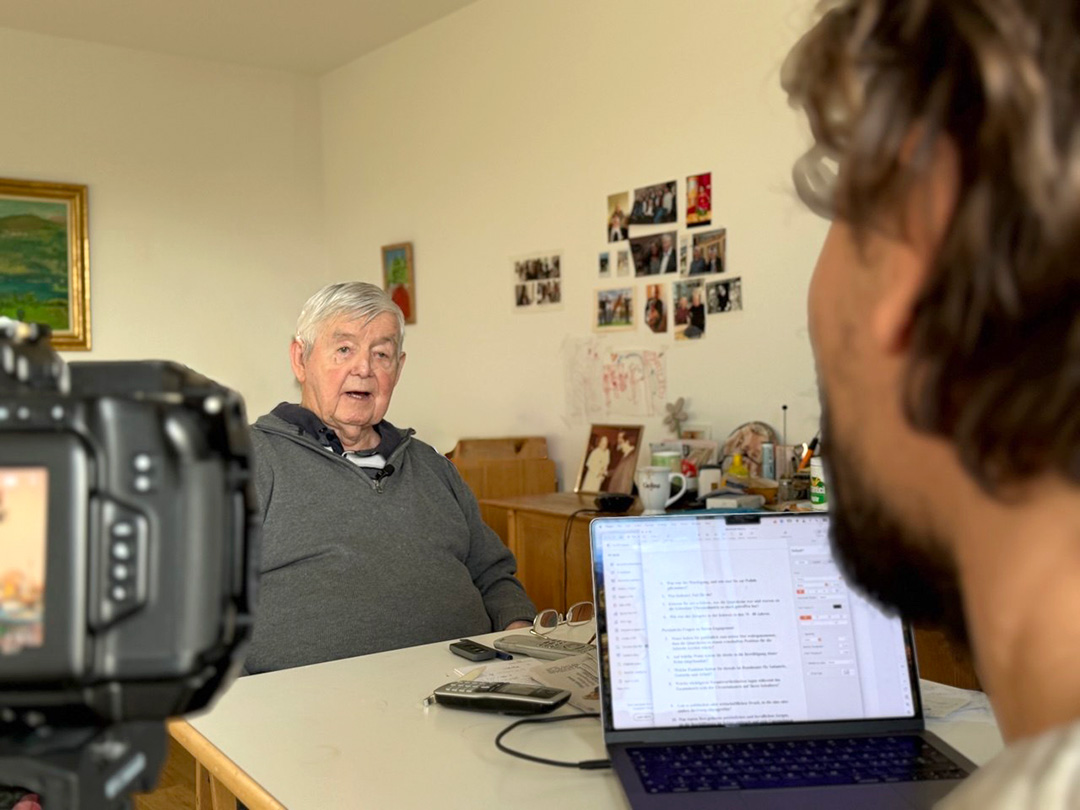
Each episode focuses on a specific Swiss story, exploring its cultural roots and significance to local communities. The storytelling is enriched with interviews, on-location footage, archival materials, and AI-generated short-films.
The film can be presented either as a standalone piece or as an extended version featuring in-depth analysis, including interviews with locals from the region where the story originates, as well as insights from specialists.
Each episode focuses on a specific Swiss story, exploring its cultural roots and significance to local communities. The storytelling is enriched with interviews, on-location footage, archival materials, and AI-generated short-films.
The film can be presented either as a standalone piece or as an extended version featuring in-depth analysis, including interviews with locals from the region where the story originates, as well as insights from specialists.
The series will begin with the Daniel Jeanrichard pilot episode for both short film and documentary piece, which establishes our methodology and quality standards.
The story of Daniel Jeanrichard is somehow the origin story of the Swiss watchmaking myth. Jeanrichard had a huge impact on what later became the Swiss watch industry, a contribution that is both foundational and transformative, yet surprisingly little known to the broader public. His pioneering role not only transformed the landscape of the "Montagnons" in his native Bressels, Locle and La Chaux-de-Fonds, it allowed for the Swiss pioneering, communitary and hardworking spirit to find unique propulsion for centuries to come.
The 2027 celebration of La Chaux-des-Fonds as the Swiss Cultural Capital, and perhaps the most profound capital of watchmaking, presents a fantastic opportunity to launch the series in a setting rich with heritage and innovation. By broadcasting the series alongside open-air screenings and special presentations in collaboration with the event, we can create an immersive cultural experience that resonates with both local and international audiences.
Daniel Jeanrichard
Individual genius, when combined with community collaboration, can create industries that completely shape and transform a region and a country.
When knowledge is shared rather than hoarded, individual curiosity becomes collective prosperity.

Short film & Documentary
In 1681, in the remote mountain town hamlet of Les Bressels, 14-year-old Daniel Jeanrichard apprenticed under his father, a proud locksmith who believed mastery comes only through restraint and obedience. When a family friend brings a broken English pocket watch, Daniel’s fascination collides with his father’s fear that he’ll ruin the precious object. Insisting, Daniel takes the watch apart, an act that sets him on a collision course with both family and fate and against all odds, he restores it.
Daniel sets out to Geneve to learn horology and master his craft. Turned away by Geneva’s powerful watchmaking guilds, guardians of both materials and knowledge, Daniel returns home undeterred. Driven by passion and ingenuity, he forges his own path, sourcing materials through smuggling channels and creating a network that would bring his vision of watchmaking to life. In his small village in the mountains, he trains his neighbors to craft parts from their homes, creating the établissage system that will birth the Swiss watchmaking tradition.
The film follows Daniel’s evolution from curious apprentice to master craftsman to industrial visionary. Daniel Jeanrichard celebrates the profound truth that when knowledge and resources are shared rather than hoarded, they have the power to transform our world and uplift entire communities. It’s a meditation on innovation, community, and the mysterious alchemy by which one person’s obsession becomes an entire culture’s legacy.
Daniel sets out to Geneve to learn horology and master his craft. Turned away by Geneva’s powerful watchmaking guilds, guardians of both materials and knowledge, Daniel returns home undeterred. Driven by passion and ingenuity, he forges his own path, sourcing materials through smuggling channels and creating a network that would bring his vision of watchmaking to life. In his small village in the mountains, he trains his neighbors to craft parts from their homes, creating the établissage system that will birth the Swiss watchmaking tradition.
The film follows Daniel’s evolution from curious apprentice to master craftsman to industrial visionary. Daniel Jeanrichard celebrates the profound truth that when knowledge and resources are shared rather than hoarded, they have the power to transform our world and uplift entire communities. It’s a meditation on innovation, community, and the mysterious alchemy by which one person’s obsession becomes an entire culture’s legacy.
Author's note
“Genius” is the word most often used to describe Daniel Jeanrichard in more than three centuries of accounts. The story of Jeanrichard, his importance, virtue, and value, has been evoked again and again, carrying a mythical seed and projecting the spiritual needs of Switzerland’s transformation. Daniel Jeanrichard embodies a sort of sacred union of all social forces in the face of adversity. As author Laurence Marti explains with depth and clarity in her book L’Invention de l’horloger, Jeanrichard “embodies the virtues of work, patience, and effort.”
In the 1600s, the region of La Chaux-de-Fonds, Bressels, Le Locle, and Neuchâtel, known as les Montagnes, was marked by a kind of ancestral poverty. The general feeling was that it was condemned to an unchanging state of subsistence. Long and harsh winters allowed for only limited agriculture. Yet it was a region with certain artisanal know-how: the use of the forge, the presence of locksmiths, engravers, gilders, goldsmiths, armorers, and other technical crafts. It was precisely this conjuncture that allowed Jeanrichard’s genius to meet his potential.
Author Maurice Favre suggests in his short essay Daniel Jeanrichard, "premier horloger des Montagnes neuchâteloises et personnage de légende" that, unlike the aristocratic Geneva watchmakers, the region of the Montagnes enabled the development of a new, family-run industry, working initially at a loss, supported in part by agriculture. As new markets in the growing watchmaking industry emerged, it was Jeanrichard’s unprecedented openness that allowed for an exponential growth of knowledge.
Indeed, the montagnons were characterized by a deeply traditional sense of values: honoring one’s family, valuing hard work rooted in Protestant ethics, and viewing enrichment as subordinate to social utility, a collective good rather than ostentatious individual gain.
Daniel Jeanrichard, as industrious as he was, is always remembered as an artisan. His division of labor and understanding of craft remained nested within family values, and would continue to do so for centuries. This marked a very different approach from the late 19th-century industrialization of Britain or the mechanization that transformed the United States, maintaining instead a focus on excellence and uniqueness in quality. Of course, the extent and intricacy political, social, and economic, of the transformations that the Neuchâtel mountains underwent since the mid-1600s are certainly impactful and deeply inform our understanding of the story we are telling.
Alongside this open and communal way of living, which characterized Switzerland’s later development into the 18th century, we can understand Jeanrichard as an uncompromisingly complete figure of genius, with nothing to hide. The manner in which he shares his knowledge with his five sons and the local community, including the likes of Jacob Brandt, demonstrates and openness and confidence unmatched at the time.
There is an important contrast to be made, at this point, in regards to the industrialization that took place in Britain in the late 1800s, the mechanization that marked the extraordinary leap in the United States of America about 100 years after its independence, and the établissage system led by the innovative Daniel Jeanrichard, the first to apply the division of labour to the watchmaking industry. It would even be more appropriate to use the term, sharing of labour, unique to the Swiss spirit of understanding common richness. Prior to this point, almost all watchmaking was done in-house with a watchmaker creating the entire timepiece.
The division of labour meant that the manufacture of individual components could be outsourced to individuals operating out of their own homes. This was in effect a true cottage industry. Each worker would specialise in specific components, creating them with uniform quality and high speed. It was an additional source of income that could be done indoors during the evenings and the long winter months. This system would only be matched, centuries later, by Japanese 20th century watchmaking revolution that incidentally led to the famous 1970s Swiss “crise horlogère”, the so-called Quartz Crisis. It would be the case for Nicolas G. Hayek in the 1980s with the creation of the Swatch group, as well as government incentives to completely restructure the watchmaking industry, to allow for the birth of the brand: Swiss-made, stylish, and marketed as fashion. If we draw a line from Jeanrichard’s forge in La Sagne (1675) to the Swatch headquarters in Biel (1983), we trace the entire arc of Swiss modernity. What Jeanrichard did in order to make time, Hayek did in order to feel time.
There is thus something that reflects a sense of spirit. Frédéric Samuel Ostervald was one of the key figures to first set the story of Daniel Jeanrichard to paper, in 1766. Until then, the history of watchmaking, already in full bloom, had been passed down through oral accounts. Ostervald provides a detailed statement of the young Daniel and his coming of age, not yet in the industrial sense we might understand today, but as the first impulse of what would later become a movement.
As Laurence Marti again notes in L’Invention de l’horloger, the image of the young Daniel Jeanrichard working in his barn workshop, creating the tools necessary to build his first watch, is analogous to the myth of the garage startup in California. Silicon Valley partly began in 1939 with Bill Hewlett and David Packard in a small Palo Alto garage at 367 Addison Avenue. Working with just $538 in capital, they built their first product, an audio oscillator, which they sold to Walt Disney Studios (incidentally Walt Disney himself started in a garage in 1923) to test the sound system for Fantasia. This feat would later be followed by Steve Jobs and Steve Wozniak (Apple), Larry Page and Sergey Brin (google), and many others. The tech startup of our times is analogous to the watchmaking industry of 17th-century Bressels.
For a young apprentice like Daniel Jeanrichard, who must already have seen many watches in the region, watchmaking would have drawn his attention much as electronics did for youth in the 1930s, as peak technology does today. His departure from his father’s wish to continue the family trade as a locksmith also represents a generational rupture. A symbol of changing times.
Jeanrichard’s memory has since been evoked as the very essence of Swiss openness and industrious calm in the face of crisis. Through economic transformations, wars, and political turmoil, one thing remains salient above all: Daniel Jeanrichard stands as a force of unity, strength, vision, generosity, and clairvoyance.
In the 1600s, the region of La Chaux-de-Fonds, Bressels, Le Locle, and Neuchâtel, known as les Montagnes, was marked by a kind of ancestral poverty. The general feeling was that it was condemned to an unchanging state of subsistence. Long and harsh winters allowed for only limited agriculture. Yet it was a region with certain artisanal know-how: the use of the forge, the presence of locksmiths, engravers, gilders, goldsmiths, armorers, and other technical crafts. It was precisely this conjuncture that allowed Jeanrichard’s genius to meet his potential.
Author Maurice Favre suggests in his short essay Daniel Jeanrichard, "premier horloger des Montagnes neuchâteloises et personnage de légende" that, unlike the aristocratic Geneva watchmakers, the region of the Montagnes enabled the development of a new, family-run industry, working initially at a loss, supported in part by agriculture. As new markets in the growing watchmaking industry emerged, it was Jeanrichard’s unprecedented openness that allowed for an exponential growth of knowledge.
Indeed, the montagnons were characterized by a deeply traditional sense of values: honoring one’s family, valuing hard work rooted in Protestant ethics, and viewing enrichment as subordinate to social utility, a collective good rather than ostentatious individual gain.
Daniel Jeanrichard, as industrious as he was, is always remembered as an artisan. His division of labor and understanding of craft remained nested within family values, and would continue to do so for centuries. This marked a very different approach from the late 19th-century industrialization of Britain or the mechanization that transformed the United States, maintaining instead a focus on excellence and uniqueness in quality. Of course, the extent and intricacy political, social, and economic, of the transformations that the Neuchâtel mountains underwent since the mid-1600s are certainly impactful and deeply inform our understanding of the story we are telling.
Alongside this open and communal way of living, which characterized Switzerland’s later development into the 18th century, we can understand Jeanrichard as an uncompromisingly complete figure of genius, with nothing to hide. The manner in which he shares his knowledge with his five sons and the local community, including the likes of Jacob Brandt, demonstrates and openness and confidence unmatched at the time.
There is an important contrast to be made, at this point, in regards to the industrialization that took place in Britain in the late 1800s, the mechanization that marked the extraordinary leap in the United States of America about 100 years after its independence, and the établissage system led by the innovative Daniel Jeanrichard, the first to apply the division of labour to the watchmaking industry. It would even be more appropriate to use the term, sharing of labour, unique to the Swiss spirit of understanding common richness. Prior to this point, almost all watchmaking was done in-house with a watchmaker creating the entire timepiece.
The division of labour meant that the manufacture of individual components could be outsourced to individuals operating out of their own homes. This was in effect a true cottage industry. Each worker would specialise in specific components, creating them with uniform quality and high speed. It was an additional source of income that could be done indoors during the evenings and the long winter months. This system would only be matched, centuries later, by Japanese 20th century watchmaking revolution that incidentally led to the famous 1970s Swiss “crise horlogère”, the so-called Quartz Crisis. It would be the case for Nicolas G. Hayek in the 1980s with the creation of the Swatch group, as well as government incentives to completely restructure the watchmaking industry, to allow for the birth of the brand: Swiss-made, stylish, and marketed as fashion. If we draw a line from Jeanrichard’s forge in La Sagne (1675) to the Swatch headquarters in Biel (1983), we trace the entire arc of Swiss modernity. What Jeanrichard did in order to make time, Hayek did in order to feel time.
There is thus something that reflects a sense of spirit. Frédéric Samuel Ostervald was one of the key figures to first set the story of Daniel Jeanrichard to paper, in 1766. Until then, the history of watchmaking, already in full bloom, had been passed down through oral accounts. Ostervald provides a detailed statement of the young Daniel and his coming of age, not yet in the industrial sense we might understand today, but as the first impulse of what would later become a movement.
As Laurence Marti again notes in L’Invention de l’horloger, the image of the young Daniel Jeanrichard working in his barn workshop, creating the tools necessary to build his first watch, is analogous to the myth of the garage startup in California. Silicon Valley partly began in 1939 with Bill Hewlett and David Packard in a small Palo Alto garage at 367 Addison Avenue. Working with just $538 in capital, they built their first product, an audio oscillator, which they sold to Walt Disney Studios (incidentally Walt Disney himself started in a garage in 1923) to test the sound system for Fantasia. This feat would later be followed by Steve Jobs and Steve Wozniak (Apple), Larry Page and Sergey Brin (google), and many others. The tech startup of our times is analogous to the watchmaking industry of 17th-century Bressels.
For a young apprentice like Daniel Jeanrichard, who must already have seen many watches in the region, watchmaking would have drawn his attention much as electronics did for youth in the 1930s, as peak technology does today. His departure from his father’s wish to continue the family trade as a locksmith also represents a generational rupture. A symbol of changing times.
Jeanrichard’s memory has since been evoked as the very essence of Swiss openness and industrious calm in the face of crisis. Through economic transformations, wars, and political turmoil, one thing remains salient above all: Daniel Jeanrichard stands as a force of unity, strength, vision, generosity, and clairvoyance.
Felix A. Bachmann, Kevin Merz.
Lugano Besso, January 2026.

Document & Research
Partnership with foundational institutions present in the geographical heart of Swiss watchmaking industry allows for a profound and detailed research structure. Research collaborations provide access to expert guidance, primary sources, and archival material, helping us maintain fidelity to the facts, and ensure historical accuracy while capturing the authentic spirit of the period.
Le Musée International de l’Horlogerie de La Chaux-de-Fonds and le Centre d’études Institut l’Homme et le Temps will work closely with the Generative Center in the elaboration of the narrative scenarios, ideas for films, detailed analysis and aesthetic precision. Additionally, the Museum will propose events related to the specific film subjects, and help the Generative Center in connection with local watchmakers.
Our goal is to craft a story that feels authentic, human, and emotionally resonant, a bridge between the factual record and the imaginative reconstruction of a time, a place, and a culture in transformation.
Le Musée International de l’Horlogerie de La Chaux-de-Fonds and le Centre d’études Institut l’Homme et le Temps will work closely with the Generative Center in the elaboration of the narrative scenarios, ideas for films, detailed analysis and aesthetic precision. Additionally, the Museum will propose events related to the specific film subjects, and help the Generative Center in connection with local watchmakers.
As part of this process, the documentary serves both as a research phase and as a foundation for the final screenplay for the short film. Interviews with historians, local communities, and specialists will enrich the narrative, allowing us to balance historical precision with creative interpretation.
Our goal is to craft a story that feels authentic, human, and emotionally resonant, a bridge between the factual record and the imaginative reconstruction of a time, a place, and a culture in transformation.